

By Etan Walker
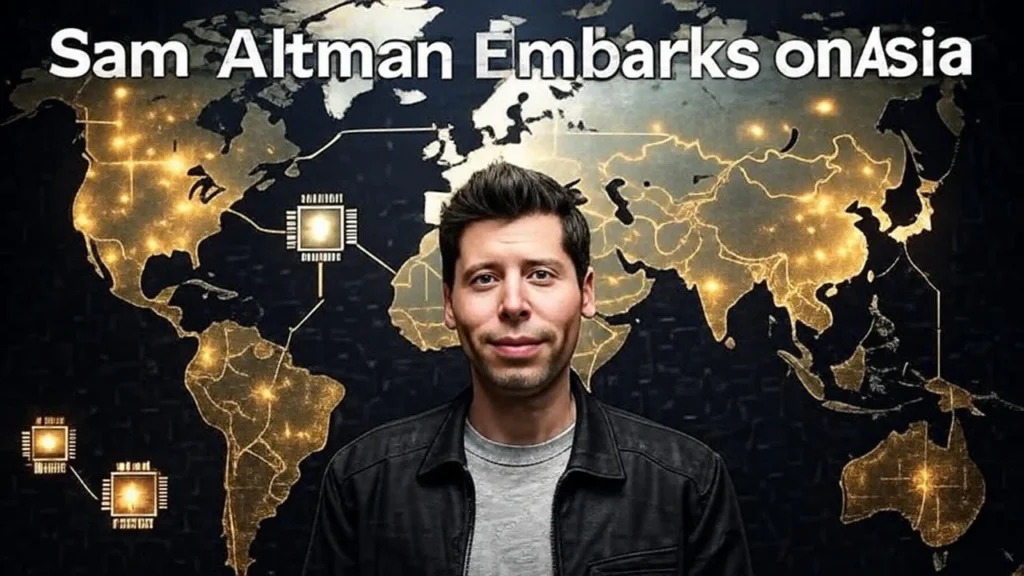
Sam Altman, the visionary CEO of OpenAI, is on an ambitious mission across East Asia and the Middle East to secure critical investments and strengthen the company’s access to advanced chips — a move designed to power OpenAI’s next phase of artificial intelligence expansion.
Since late September, Altman has been engaging with top-tier hardware suppliers in Taiwan, South Korea, and Japan, pushing for increased production capacity and preferential access to the chips essential for AI model training. His goal: to ensure OpenAI stays ahead in the race for computing dominance as demand for AI infrastructure soars worldwide.
During his tour, has met with executives from major tech giants, including Taiwan Semiconductor Manufacturing Company (TSMC), Foxconn, Samsung, and SK Hynix. These discussions have centered around ramping up production speed, securing, guaranteed chip supply, and establishing long-term partnerships.
In South Korea, both Samsung and SK Hynix have reportedly signed letters of intent to supply high-performance memory chips for OpenAI’s expanding network of data centers. Altman’s talks also extended to Japan, where Sam Altman is engaging companies like Hitachi to explore collaborations on power transmission and data center infrastructure, a crucial step in sustaining the massive energy demands of large-scale AI systems.
Altman’s global campaign underscores the growing pressure among tech leaders to secure scarce computing resources. OpenAI projects it will spend nearly $16 billion this year on cloud computing and server rentals — with projections climbing to $400 billion by 2029 as its models become increasingly advanced.
The global chip supply chain remains under immense strain, with TSMC dominating GPU manufacturing and memory production heavily concentrated in East Asia. By negotiating directly with these manufacturers, Sam Altman is seeking to ensure that OpenAI receives top-tier production priority in an environment where supply remains tight and competition fierce.
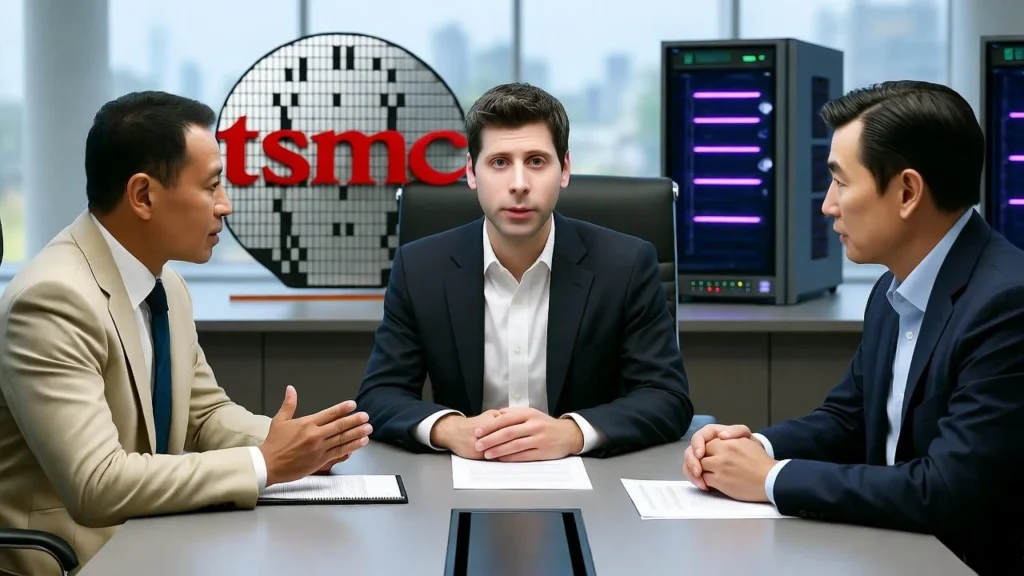
In some cases, Altman has even proposed co-investment and joint development of next-generation AI hardware — a strategy meant to align incentives and secure OpenAI’s long-term technological independence.
In South Korea, OpenAI is reportedly planning new 20-megawatt data centers in partnership with Samsung and SK Hynix. There are also early discussions around innovative “floating” data center designs, aimed at addressing land shortages and optimizing cooling efficiency — both major challenges for large-scale AI operations.
Meanwhile, the Middle East leg of Altman’s trip focuses on securing funding and partnerships. In the United Arab Emirates, Altman is holding talks with sovereign wealth funds such as Mubadala and MGX, exploring opportunities for joint infrastructure investments and capital support for OpenAI’s rapid expansion. The UAE has previously participated in OpenAI funding rounds, signaling strong regional interest in advancing AI technology.

Despite the momentum, challenges persist. The growing complexity of AI models demands enormous chip and memory capacity, stretching the limits of global semiconductor production. Industry analysts caution that the high capital costs and lengthy development timelines of the semiconductor industry may slow OpenAI’s expansion pace.
Still, Altman’s strategic push, including exploring bespoke ASIC chip co-development, shows OpenAI’s intent to innovate its way through these limitations.
With its market valuation now estimated around $500 billion, and fresh investments from major players like SoftBank and UAE-based entities, OpenAI has both the financial strength and credibility to secure favorable terms with global suppliers.
Altman’s proactive global outreach marks a defining moment in OpenAI’s growth strategy, blending technology diplomacy, industrial collaboration, and bold infrastructure expansion. By forging deep partnerships across Asia and the Middle East, He is not just ensuring OpenAI’s survival in the competitive AI landscape; Sam Altman’s positioning it to lead the next generation of global innovation.
If you want to make your Daily tasks easy with AI, then also explore this, Make Life Easier